Jewelry Allergy Guide for Comfortable Style
That new pair of hoops should make your outfit feel finished, not leave your earlobes itchy by bedtime. If jewelry has ever caused redness, dryness, swelling, or a rash, you are not being fussy - your skin may be reacting to a metal, a coating, or even the combination of heat, moisture, and friction.
This jewelry allergy guide is here to make getting dressed feel simple again. A sensitivity does not mean you have to give up statement earrings, stacked rings, or the necklace you wear on repeat. It means learning what your skin prefers, choosing with more intention, and giving irritated areas time to recover.
What a jewelry allergy can look like
The most common jewelry-related allergic reaction is allergic contact dermatitis. It happens when your immune system recognizes a substance touching your skin as an irritant. Nickel is the usual culprit, but it is not the only possibility. Some people react to cobalt, chromium, copper, brass, plating ingredients, or components in clasps and earring backs.
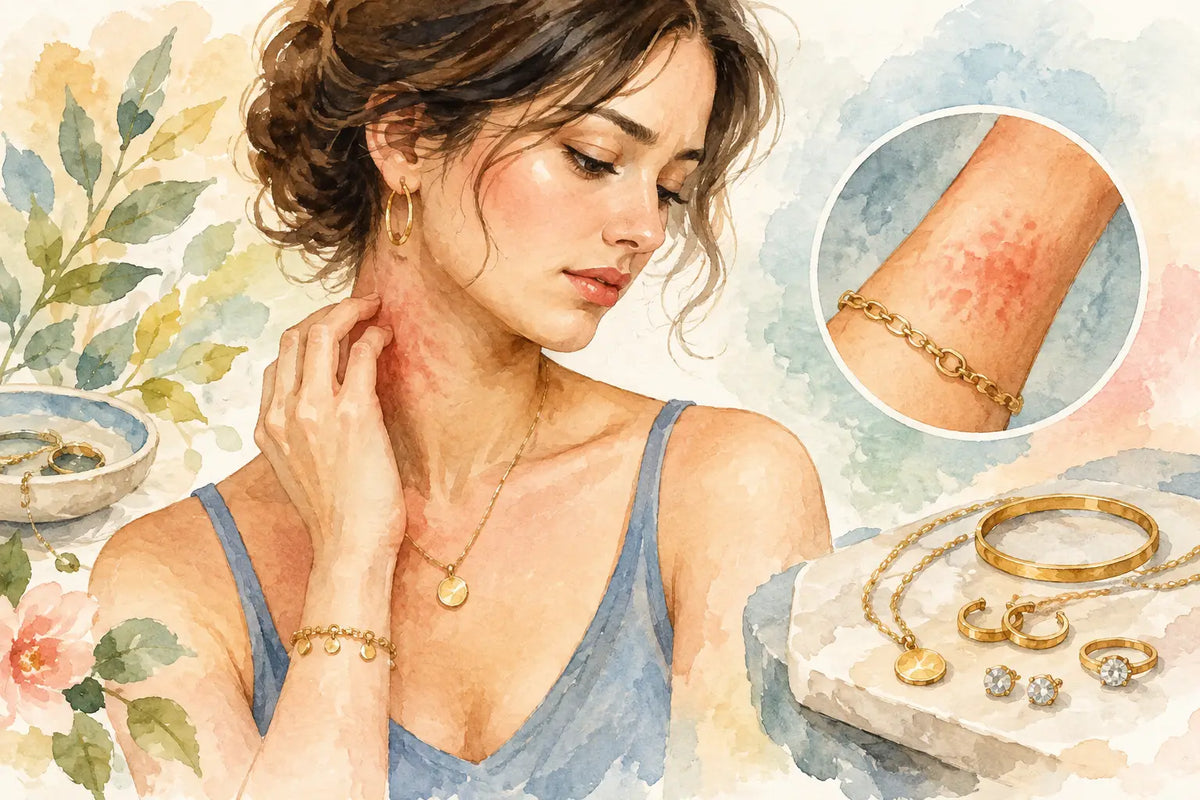
Symptoms often appear exactly where the jewelry touches. You may notice itching, burning, redness, small bumps, flaking, cracked skin, tenderness, or swelling. With earrings, the skin can feel warm or sore around the piercing. A necklace reaction may show up at the nape of the neck or along the collarbone, while a ring can cause a dry, itchy band around the finger.
Timing offers a clue, although it is not a diagnosis. A reaction can begin within hours, but it may also develop after a day or two of wear. You can also wear a metal for years before becoming sensitive to it. Repeated exposure can change the way your skin responds.
Not every jewelry rash is an allergy. Sweat, perfume, sunscreen, soap residue, or jewelry that traps moisture can create irritation without an immune response. Tight rings and heavy earrings can also cause friction. The practical takeaway is the same: remove the piece, let your skin calm down, and pay attention to the pattern before wearing it again.
Jewelry allergy guide: metals worth knowing
Material descriptions can be confusing, especially when a finish is more visible than the base metal underneath. A gold-tone piece, for example, is not necessarily solid gold. It may be plated over another metal, and the amount of plating matters when it comes to wear over time.
Nickel is widely used in metal alloys because it is durable and affordable. It is also one of the most frequent causes of metal allergy. If you know nickel bothers you, look for jewelry clearly described as nickel-free and avoid guessing based on color alone. Silver-tone jewelry can contain nickel, and gold-tone jewelry can as well.
Stainless steel is often a comfortable option, but the details matter. Many stainless-steel alloys contain some nickel, though it is often bound tightly enough that many people tolerate it well. Surgical-grade stainless steel may be a good choice for some wearers, particularly for simple earrings and everyday pieces, but it is not a universal guarantee for a confirmed nickel allergy.
Titanium and niobium are widely considered gentler choices for highly sensitive skin. They are especially worth considering for earrings, where metal sits directly in a piercing for hours. Solid gold can also work beautifully, but aim for higher-quality solid gold rather than gold-plated pieces if your sensitivity is significant. Lower-karat gold contains more alloy metals, so a 10K piece may not suit every wearer who does well with 14K or 18K.
Sterling silver is another popular choice, yet it is an alloy rather than pure silver. It commonly includes copper for strength. Many people wear it comfortably, while others find copper or tarnish irritating. Fine silver is purer but softer, making it less common for jewelry designed for frequent wear.
For plated fashion jewelry, the trade-off is straightforward: plating offers beautiful, accessible color and trend-forward design, but it can wear down with regular friction, water, sweat, and product exposure. Once the base metal is exposed, a piece that felt fine at first may begin to irritate your skin. That does not make plated jewelry a poor choice. It simply makes care and rotation more valuable.
How to choose jewelry that feels as good as it looks
Start with the pieces that touch your skin most closely and most often. Earring posts, backs, ring interiors, bracelet clasps, necklace chains, and pendant bails deserve the closest attention. A nickel-free earring post matters more to a sensitive ear than a decorative charm that does not touch the skin.
Read material information before buying, and favor clear descriptions over vague labels such as “hypoallergenic.” That word can be useful, but it is not a single regulated promise that guarantees a reaction-free experience for every person. Your sensitivity is personal. The best material is the one your skin has already shown it can tolerate.
If you are trying a new piece, wear it for a short period at home first. Choose a calm-skin day rather than testing it after a workout, at the beach, or during a long event. Heat and sweat can speed up irritation, especially under a close-fitting ring or necklace. If the area stays comfortable, gradually extend your wear time.
A clear jewelry wardrobe can make this easier. Keep your most skin-friendly essentials for everyday use, then bring out plated, fashion-forward pieces for shorter occasions when you want extra shine. A minimalist chain, a pair of comfortable hoops, and a favorite adjustable ring can do a lot of styling work without asking your skin to compromise.
Small care habits that protect your skin and your jewelry
Jewelry care is skin care in miniature. Before you put on a necklace or earrings, make sure lotion, perfume, hairspray, and sunscreen are fully dry. These products can leave residue on metal and create a damp layer against the skin. Apply jewelry last when getting ready, then remove it first when you get home.
Avoid wearing fashion jewelry in the shower, pool, hot tub, or while exercising. Chlorine, saltwater, sweat, and soap can dull finishes and wear through plating sooner. They can also make irritation more likely by keeping moisture and residue against the skin.
After wearing a piece, gently wipe it with a soft, dry cloth before storing it. Keep jewelry dry and separated where possible, ideally away from bathroom humidity. This helps preserve the finish, reduces tarnish, and prevents pieces from rubbing against one another.
If a clasp or earring back is the only part that bothers you, replacing that component with a more skin-compatible alternative may help. For a short-term barrier, some people use a jewelry-specific protective coating. Treat it as a temporary solution, not a substitute for choosing a metal you tolerate. Coatings wear away and need to be reapplied, especially on rings and bracelet closures.
What to do when your skin reacts
Take the jewelry off as soon as you notice discomfort. Wash the affected area gently with mild soap and lukewarm water, then pat it dry. Avoid scrubbing, exfoliating, or applying fragranced products to irritated skin. A cool compress can feel soothing when redness or itching is mild.
Give the area time to heal before trying jewelry again. Wearing another pair of earrings or covering the spot with a different ring too soon can prolong the irritation. If you suspect one metal, do not test it repeatedly on already-reactive skin. That can make the situation worse.
Seek advice from a dermatologist or qualified healthcare professional if the rash is severe, spreads, looks infected, persists after removing the jewelry, or affects a new or healing piercing. A clinician can help distinguish allergy from infection, eczema, or another skin concern. Patch testing may identify specific contact allergens, which gives you a much clearer shopping filter going forward.
Style should feel like self-expression, not something you have to endure. Choose materials with care, save your most sensitive-skin-friendly pieces for daily wear, and let every polished detail serve both your look and your comfort.