Is Fashion Jewelry Hypoallergenic? What to Know
That pair of sculptural hoops may look perfect with everything in your closet, but if your ears turn red by lunchtime, style suddenly feels less effortless. So, is fashion jewelry hypoallergenic? Sometimes, but not automatically. The answer depends on the metals beneath the finish, the quality of the plating, and your own skin’s sensitivities.
Fashion jewelry can be a beautiful, accessible way to refresh your look with layered chains, celestial details, pearl accents, or an everyday statement ring. The key is knowing what you are wearing. A little material awareness helps you choose pieces that feel as good as they look.
Is Fashion Jewelry Hypoallergenic by Default?
No. “Fashion jewelry” describes a category and price point, not one specific material. It can include stainless steel, brass, copper, zinc alloy, sterling silver, resin, glass, or plated metals. Because the materials vary so widely, one fashion piece may be comfortable for sensitive skin while another may cause irritation.
“Hypoallergenic” also deserves a closer look. The term generally means a product is less likely to trigger an allergic reaction, not that it is guaranteed to be irritation-free for every person. There is no universal standard that makes a hypoallergenic label identical from one jewelry maker to the next.
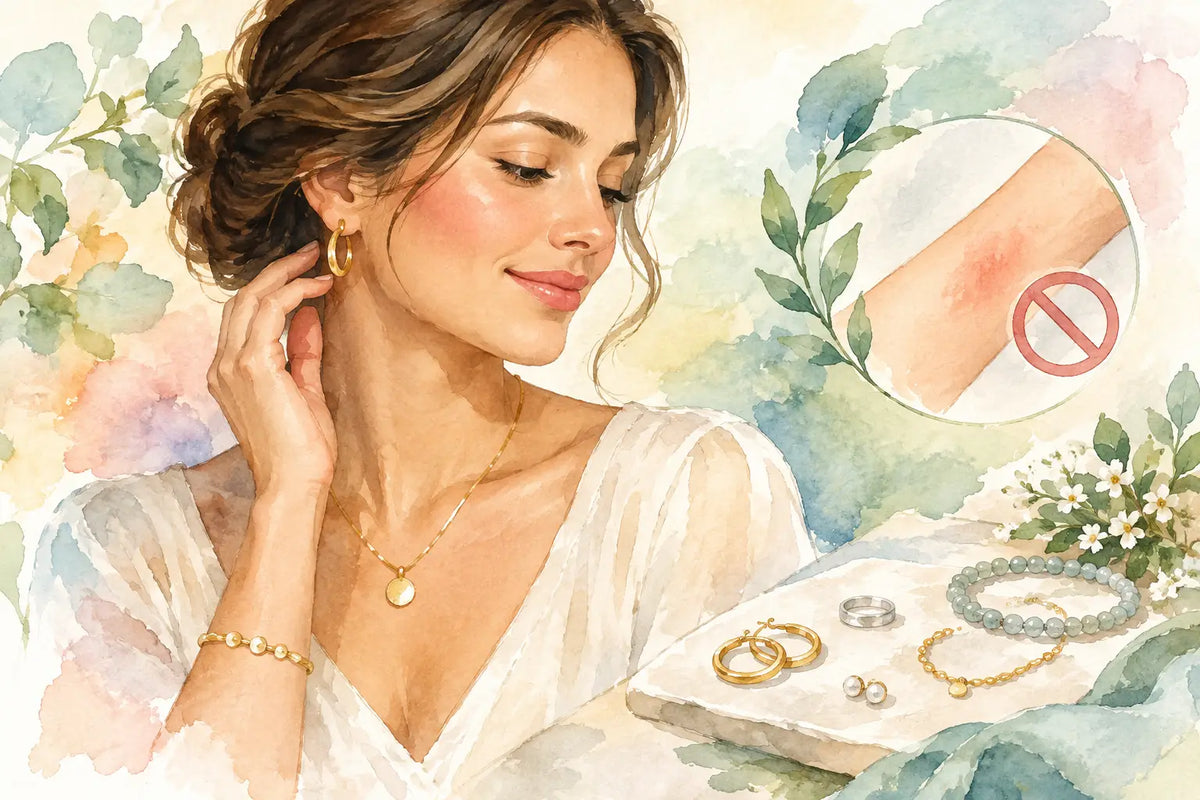
For most jewelry sensitivities, nickel is the usual concern. Nickel is commonly used in metal alloys because it adds strength and can help create certain finishes. It is also one of the most common causes of allergic contact dermatitis, which can appear as itching, redness, dryness, bumps, or a rash where jewelry touches the skin.
That does not mean every reaction is a nickel allergy. Friction, trapped moisture, perfume residue, soaps, and tarnish can all make skin feel unhappy. Still, if the same spot becomes itchy each time you wear a particular pair of earrings or necklace, the metal is a likely clue.
The Materials That Matter Most
The best choice is personal, but material details can help you shop with more confidence.
Stainless steel can be a strong everyday option
High-quality stainless steel is durable, polished, and often a practical choice for frequent wear. Some types contain nickel, though the nickel may be tightly bound within the alloy and less likely to transfer to skin than it would in lower-quality mixed metals. People with a confirmed, severe nickel allergy may still prefer to proceed carefully.
The phrase “surgical steel” can sound reassuring, but it is not a guarantee of comfort. Ask for the specific material when possible, especially if your skin is highly reactive.
Titanium and niobium are often sensitivity-friendly
Titanium and niobium are widely favored for sensitive ears and skin because they are generally low-reactivity materials. They are especially worth considering for earrings, where a fresh or easily irritated piercing has direct contact with the post.
These materials may cost more than basic fashion alloys, and they are not always available in every trend-forward silhouette. For a pair you plan to wear constantly, that trade-off can be worthwhile.
Sterling silver and gold depend on the alloy
Sterling silver is not pure silver. It is typically blended with other metals for strength, most often copper. Many people wear it comfortably, while others find that copper or tarnish contributes to irritation. Rhodium-plated sterling silver can offer a bright finish, but that finish can wear over time.
Gold jewelry follows the same rule: the karat and alloy matter. Higher-karat gold contains more gold and less of the other metals used for durability. Lower-karat gold, gold-filled jewelry, and gold-plated styles may contain different base metals underneath. White gold can sometimes include nickel, so shoppers with nickel sensitivity should not assume all gold-toned or gold jewelry is automatically hypoallergenic.
Brass, copper, and zinc alloy require more care
These metals are common in affordable fashion jewelry and allow designers to create expressive shapes at an accessible price. They can also be more likely to cause discoloration or irritation for some wearers, particularly when worn against warm, damp skin.
A quality coating can create a comfortable barrier at first, but it is not permanent. Once plating wears through, the base metal may come into contact with skin. That is why the same necklace can feel perfect for months, then suddenly start to irritate at the clasp or pendant edge.
Why Plating Changes the Experience
A gold-tone finish is not the same thing as solid gold. Plated jewelry has a thin layer of metal applied over a base metal, while gold vermeil is traditionally gold plated over sterling silver. Both can be beautiful choices, but the thickness and durability of the finish affect how the piece wears.
For occasional events, a delicate plated drop earring or bold geometric cuff can be an easy way to embrace a trend. For pieces you wear every day, such as a favorite chain or ring, material transparency and care matter more. Sweat, lotion, hand sanitizer, showering, and friction can all gradually wear down plating.
This is not a reason to avoid plated jewelry. It is a reason to match the piece to your routine. A special-occasion statement earring and a daily-wear necklace do not need the same construction to earn a place in your jewelry box.
How to Choose Hypoallergenic Fashion Jewelry
Start by identifying your pattern. If your earlobes react but your wrists do not, focus on earring posts and backs first. If rings leave itchy patches, consider whether hand washing, fragrance, or the metal itself is the trigger. A dermatologist or allergist can help confirm a suspected metal allergy through patch testing.
When shopping, look beyond broad claims. Clear material information is more useful than a vague “skin-friendly” label. Check whether a brand identifies the base metal, plating, posts, clasps, and nickel content. If those details are not available, treat a hypoallergenic claim as a starting point rather than a promise.
For sensitive ears, prioritize titanium, niobium, or well-specified stainless-steel posts. For necklaces and bracelets, choose styles with smooth surfaces and a comfortable fit. A chain that rubs constantly or a tight ring that traps soap can irritate skin even when the metal is otherwise a good match.
It also helps to introduce one new piece at a time. Wear it for a few hours before making it an all-day staple. This gives your skin a chance to tell you whether the material and finish work for you.
Care Helps Keep Jewelry Comfortable
Thoughtful care protects both your jewelry and your skin. Put on necklaces, earrings, and rings after applying perfume, body lotion, hairspray, and sunscreen. Remove them before swimming, exercising, showering, or sleeping, especially if they are plated.
After wear, wipe each piece gently with a soft, dry cloth and store it separately in a dry place. This reduces exposure to moisture, residue, and scratches that can weaken a finish. Avoid harsh jewelry cleaners unless they are specifically suited to the material.
If a piece begins causing irritation, stop wearing it right away. Clean it, inspect for discoloration or worn plating, and give your skin time to recover. Do not try to wear through a reaction for the sake of an outfit.
Style Should Feel Good, Too
Affordable, design-forward jewelry lets you follow your mood: a minimalist chain one day, a pearl-accented statement the next. Choosing more carefully does not mean sacrificing that freedom. It means building a collection with pieces that suit your style, your routine, and your skin.
The most wearable jewelry is not simply the piece that catches the light. It is the one you reach for without hesitation, knowing it brings a polished finishing touch and lets you move through the day comfortably.