Why Do Earrings Irritate Ears? Causes and Fixes
A favorite pair of hoops should finish an outfit, not leave your lobes red, itchy, or sore by dinner. So, why do earrings irritate ears? Usually, the answer comes down to one of three things: a sensitivity to the metal, friction or pressure from the earring, or irritation around a piercing that has not fully settled.
The good news is that irritated ears do not mean you have to give up on statement drops, classic studs, or your everyday go-to hoops. A few thoughtful choices can make a noticeable difference - and help jewelry feel as good as it looks.
Why Do Earrings Irritate Ears? The Most Common Reasons
Nickel sensitivity is often the culprit
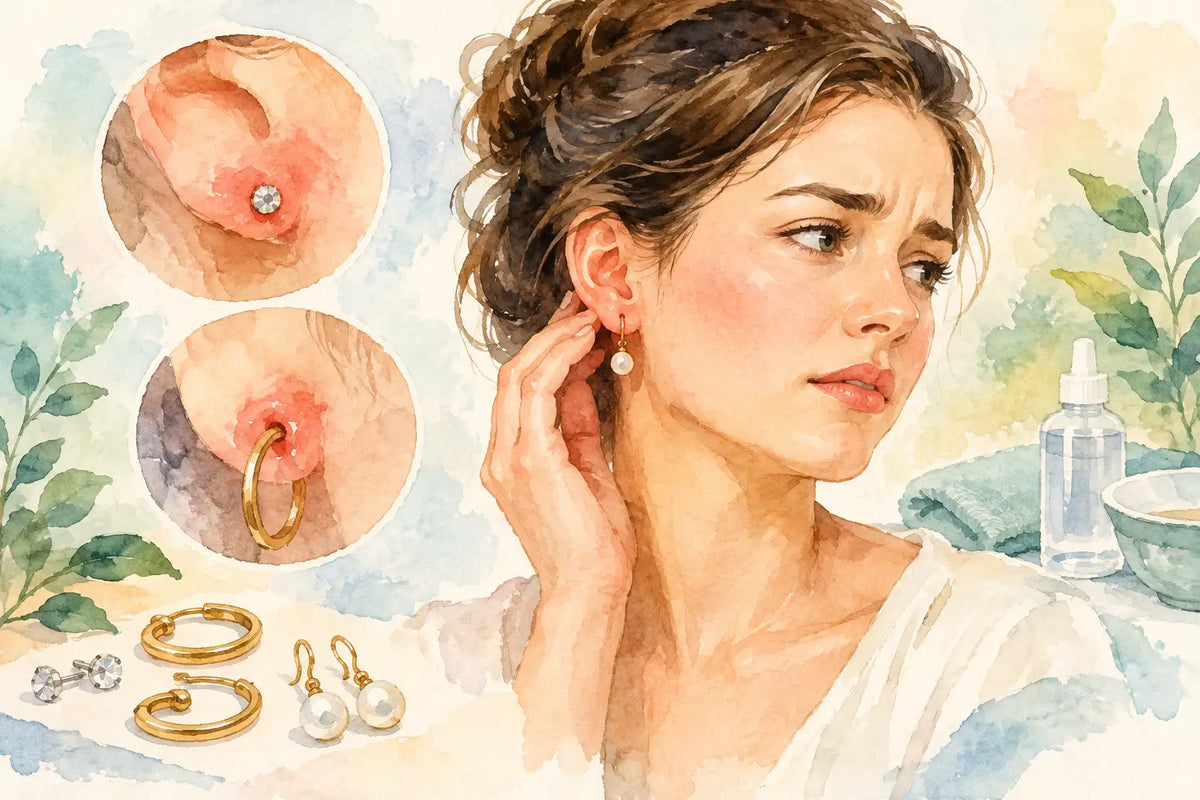
Nickel is a metal commonly used in jewelry alloys and beneath some plated finishes. For many people, it causes no problem at all. For others, even brief skin contact can trigger allergic contact dermatitis: itching, redness, dryness, swelling, tiny bumps, or a rash that appears where the post, backing, or hoop touches the skin.
A reaction is not always immediate. Your ears may feel fine for a few hours, then become warm and itchy later that day or the next morning. Nickel sensitivity can also develop over time, which explains why a pair you wore years ago may suddenly feel uncomfortable now.
Plated jewelry deserves a little extra attention here. A plated piece can look polished and feel comfortable at first, but the base metal may become more exposed as the finish naturally wears with frequent use, sweat, water, and fragrance. That does not make plated jewelry a bad choice. It simply means finish care and wear habits matter, especially if your skin is reactive.
Your piercing may be irritated, not allergic
An earring post can rub the inside of a piercing, particularly when the post is thick, textured, or slightly rough. Heavy earrings can pull on the lobe all day, while very tight backs may trap moisture and create pressure. Sleeping in earrings, wearing headphones over bulky styles, or constantly adjusting a dangling earring can add friction too.
New piercings are especially sensitive. Earlobes can take several weeks to heal, and cartilage piercings often take much longer. Changing earrings too early, touching the piercing with unwashed hands, or using jewelry that is not appropriate for healing can prolong tenderness.
Buildup from skin care, hair products, and sweat
The source of irritation may not be the earring itself. Hair spray, dry shampoo, perfume, makeup, sunscreen, and shampoo residue can collect around the piercing and on the metal. Add sweat after a workout or a warm day, and the area can feel itchy or inflamed.
This is why irritation sometimes seems random. The same earrings may feel perfect on a low-key day and uncomfortable after a long commute, a workout class, or an evening when you have layered on fragrance and styling products.
The earring may simply be too heavy or tight
Weight is a style factor, but it is also a comfort factor. Oversized hoops and dramatic drop earrings create beautiful movement, yet they can strain stretched or delicate lobes if worn from morning to night. Tight butterfly backs can press into the skin, while hoop closures can pinch if the fit is too snug.
If discomfort is mostly a dull ache rather than itching or a rash, pressure is more likely than a metal allergy. Try a lighter pair for a few days. If your ears settle quickly, the solution may be as simple as saving bolder styles for shorter occasions.
How to Calm Irritated Ears
Start by removing the earrings that seem to be causing the problem. Give your ears a break from jewelry until redness, soreness, and itching improve. Wash the outside of the earlobe gently with mild soap and lukewarm water, then pat it dry with a clean towel.
Avoid applying perfume, harsh alcohol-based products, or random home remedies directly to the piercing. These can dry out or further irritate the skin. If you suspect an allergic reaction, a pharmacist or healthcare professional can advise you on appropriate over-the-counter options. For a new piercing, follow the aftercare guidance from your professional piercer rather than experimenting with products.
Do not force an earring through a sore or swollen hole. That can tear the skin and turn a small irritation into a bigger problem. If a piercing is new and jewelry removal is difficult, ask a piercer or clinician for guidance.
When to seek medical care
Mild sensitivity often improves when the trigger is removed. But increasing pain, heat, pronounced swelling, spreading redness, thick discharge, fever, or a lobe that appears to be swallowing the backing can signal an infection or another issue that needs prompt medical attention.
A persistent rash can also be worth discussing with a dermatologist. They may help identify a metal allergy through patch testing, which is more useful than guessing based on one uncomfortable pair of earrings.
Choosing Earrings for Sensitive Ears
There is no one material that works for every person. Skin sensitivity varies, and a reaction may come from the post, the backing, the hoop closure, or a worn area of plating rather than the visible decorative element. Still, some materials are generally better starting points for sensitive ears.
Titanium and niobium are widely favored for sensitive skin because they are typically nickel-free and lightweight. High-quality stainless steel can work well for many wearers, though its composition varies and some grades may contain nickel. Solid gold can be another good choice, but the karat matters: gold alloys often include other metals for durability, so higher karat is not automatically a guarantee of comfort for everyone.
For freshly healed piercings or known metal allergies, ask specifically about the material of the post and backing, not just the overall earring. A stylish pearl-accented drop may have a different metal post than its decorative front. Clear material details help you choose with confidence.
If you love fashion jewelry, consider rotating your collection. Reserve more delicate plated styles for a dinner, event, or photo-ready moment, then choose your most comfortable materials for long workdays, travel, workouts, and sleep. Style should feel personal, never punishing.
Small Care Habits That Make a Big Difference
Clean earrings regularly, especially the posts and backs. A soft cloth can remove surface oils after each wear; occasional gentle cleaning with mild soap and water is useful for materials that tolerate it. Dry each piece completely before storing it.
Put earrings on after applying hair products, makeup, lotion, and perfume. Take them off before showering, swimming, and exercising whenever possible. Water, chlorine, sweat, and product residue can dull finishes over time and create the conditions that make sensitive skin unhappy.
It also helps to inspect favorites before wearing them. Look for peeling plating, rough posts, bent closures, discolored backs, or sharp edges. An earring that once felt effortless may need retirement or repair if its surface has changed.
For heavier styles, try supportive earring backs or choose designs with a balanced silhouette. You can still wear the sculptural hoop or celestial drop that makes an outfit feel complete. Just give your ears a lighter option for the days when comfort needs to lead.
Let Comfort Shape Your Jewelry Routine
Jewelry is meant to add a little brightness to the everyday - a polished detail for a simple tee, a finishing touch for a gift-worthy look, a small expression of your style. Listening to your ears is part of making that experience last.
Choose materials thoughtfully, care for the pieces you love, and do not ignore repeated irritation. The right earrings should leave you feeling more like yourself, not counting the minutes until you can take them off.