Can Fashion Jewelry Get Wet? A Care Guide
A quick rinse after washing your hands may not seem like much. But repeated contact with water, soap, lotion, and steam can slowly change the finish of a favorite necklace or pair of hoops. So, can fashion jewelry get wet? It can, but that does not mean water is good for it. A little accidental splash is usually manageable. Regular exposure is where beautiful details can start to lose their shine.
Can Fashion Jewelry Get Wet?
Fashion jewelry is best kept dry whenever possible. Unlike solid precious metals, many fashion pieces use a base metal with a plated finish, decorative coating, glass stones, resin details, faux pearls, or adhesive-set accents. Water itself is only part of the concern. The ingredients carried in water - hand soap, chlorine, salt, minerals, shampoo, and skincare - can leave a film behind or speed up wear.
That does not mean you need to panic over a few raindrops. If your bracelet gets splashed at lunch or your ring gets wet while you rinse a cup, gently dry it right away. The real goal is not perfection. It is reducing the repeated moisture that can dull a polished finish, affect plating, or weaken delicate settings over time.
Think of fashion jewelry as the finishing touch to your look, not as shower-proof equipment. A thoughtful care routine helps accessible, design-forward pieces stay ready for more outfits, more compliments, and more memorable occasions.
Why Water Changes the Look of Jewelry
Plated jewelry gets its luminous color from a thin outer layer. With frequent friction and moisture, that layer may gradually fade, revealing more of the base metal beneath. This is a normal part of wear, especially on rings and bracelets that meet hand sanitizer, countertops, sleeves, and running water throughout the day.
Soap and skincare can be just as troublesome as water. Residue settles into chain links, around clasps, and behind stones, making jewelry look less bright even when the finish itself is intact. Perfume, hairspray, body oil, and sunscreen can also react differently depending on the materials used.
Pearl-accented styles deserve extra care. Whether natural, cultured, or faux, pearls can lose their soft glow when exposed to chemicals, excess moisture, or abrasive cleaning. Resin, enamel, and glued embellishments also prefer a dry life. Prolonged soaking may weaken adhesives or affect the surface over time.
When to Take Fashion Jewelry Off
The easiest rule is simple: jewelry goes on after your beauty routine and comes off before water-heavy activities. This one habit protects your pieces without asking you to give up the layered chains, sculptural earrings, or adjustable rings that make an everyday outfit feel complete.
Remove fashion jewelry before you shower, bathe, swim, use a hot tub, or wash your hair. Chlorine and saltwater are especially hard on plated finishes, and hot water combined with soap creates an unnecessary challenge for delicate details. Take it off before a workout, too. Sweat contains salts, and active movement adds friction where chains, rings, and bracelets touch the skin.
Handwashing is the one everyday gray area. If you wear rings constantly, remove them before washing whenever practical. If you do not, dry them thoroughly after each wash and avoid leaving soap trapped beneath the band. A necklace or pair of earrings usually has less direct contact with water, but taking them off before a shower or face wash is still the better choice.
How to Keep Fashion Jewelry Looking Fresh
Care should feel easy, not fussy. A few small choices make the biggest difference.
First, let fragrance, lotion, sunscreen, and makeup settle before putting on jewelry. This gives product residue less opportunity to build up on your favorite pieces. Next, use a soft, dry microfiber cloth to give jewelry a quick wipe after wearing it. The cloth removes fingerprints, skin oils, and light residue without the abrasion of paper towels or rough fabric.
Storage matters, too. Tossing necklaces, earrings, and rings together in a bathroom drawer invites tangles, scratches, and humidity exposure. Keep each piece in a soft pouch, a lined jewelry box, or its own compartment. Store it somewhere cool and dry, away from a steamy shower or a sunny windowsill.
For layered necklaces, fasten the clasps before putting them away. This small step limits tangling and helps fine chains hold their shape. For statement earrings and pearl-accented designs, avoid stacking heavy pieces on top of them. A little space preserves the details that make them special.
What to Do If Your Jewelry Gets Wet
Accidents happen. If fashion jewelry gets wet, do not rub it aggressively or reach for a harsh cleaner. Pat it dry with a soft, lint-free cloth, paying attention to clasps, chain links, and the underside of stones. Then leave the piece out on a clean, dry surface until all moisture has evaporated.
Do not use a hair dryer, place jewelry on a radiator, or leave it in direct sun to speed up the process. High heat can affect adhesives, coatings, resin, and delicate accents. Gentle air drying is the safer choice.
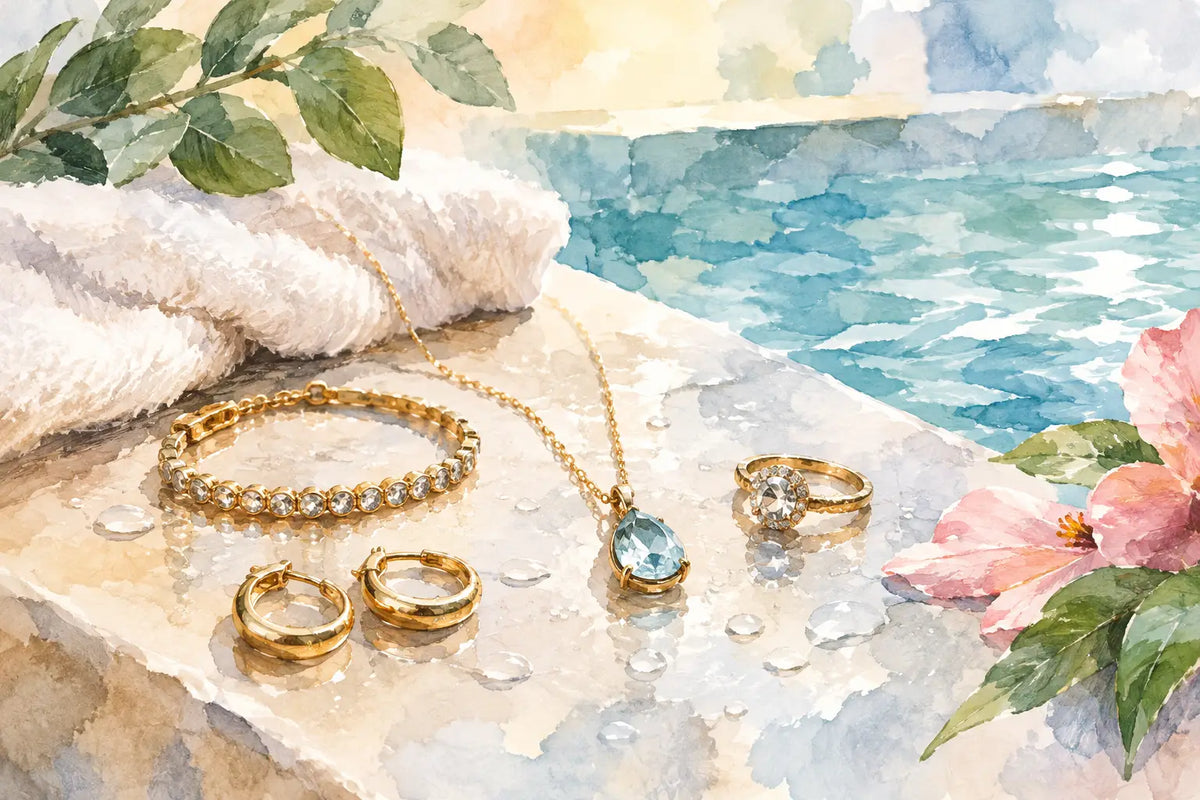
If the piece was exposed to saltwater or chlorine, wipe it promptly with a cloth lightly dampened with plain water, then dry it completely. This is not a reason to make a habit of swimming in fashion jewelry. It is simply the best response when a spontaneous beach day or poolside moment catches you wearing something you love.
Can Fashion Jewelry Get Wet if It Is Gold Plated?
Gold-plated fashion jewelry can handle an occasional splash, but it should not become your shower, swim, or gym companion. The thickness of the plating, the base metal, how often you wear it, and how it meets your skin all affect how long the finish lasts. Even higher-quality plating benefits from dry, careful wear.
Rings and bracelets generally show wear first because they receive more daily contact. Necklaces and earrings may stay bright longer when they are removed before showering and stored thoughtfully. This is one reason a well-curated jewelry collection feels so useful: rotate your most-worn pieces, match styles to the moment, and give each design a little breathing room between wears.
If you notice fading, darkening, or a change in texture, pause before using DIY cleaning tricks. Toothpaste, baking soda, vinegar, and abrasive polishing cloths can remove more of a plated finish instead of restoring it. A dry microfiber cloth is usually the safest first step for fashion jewelry.
Make Care Part of Your Style Ritual
Great style is built from details, and jewelry care is one of them. Put on your favorite pieces as the final step before heading out. Take them off when the day winds down. Keep them dry, clean, and stored with intention.
At Laliyo, we believe elegant accessories should feel attainable, wearable, and worth caring for. The extra minute you spend protecting a celestial charm, polished hoop, or layered chain helps it remain part of your story for seasons to come. Wear it beautifully, then give it the care that lets it shine again tomorrow.