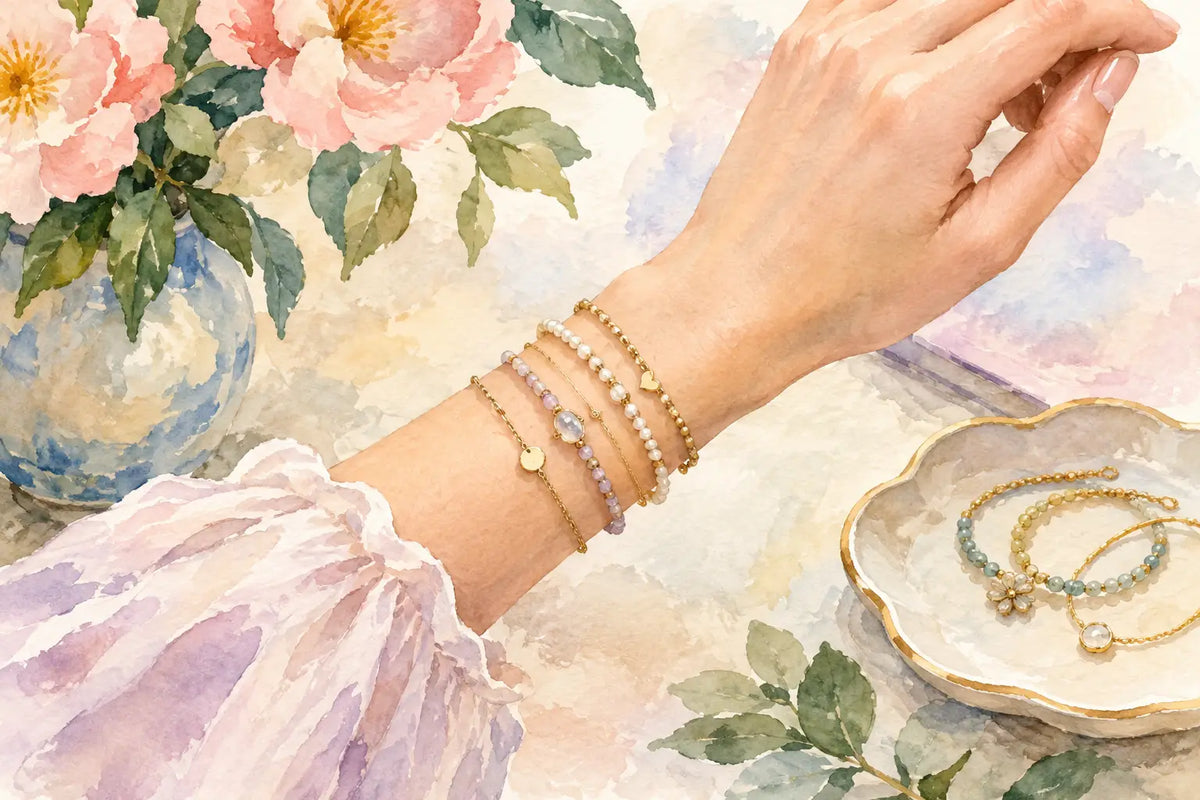
Bracelets for Small Wrists That Fit Beautifully
A bracelet should finish an outfit, not slide halfway down your hand by lunchtime. For anyone shopping for bracelets for small wrists, the right fit changes everything: the piece looks more intentional, feels more comfortable, and stays where its design can be seen. The good news? You do not have to settle for oversized chains or stack your arm with pieces that never quite sit right.
A smaller wrist has its own styling advantage. Delicate details read beautifully, a polished chain can feel effortlessly refined, and a thoughtfully proportioned stack brings personality without competing with your look. It is simply a matter of choosing length, closure, and shape with a little more care.
How to Measure for Bracelets for Small Wrists
Start with a flexible measuring tape around the narrowest part of your wrist, just above the wrist bone. Keep it snug but not tight. If you do not have a tape measure, wrap a strip of paper or string around your wrist, mark the overlap, and measure it against a ruler.
That number is your wrist circumference, not necessarily your bracelet size. Add about one-quarter to one-half inch for a close, tailored fit. Add one-half to three-quarters of an inch if you want everyday comfort and easy movement. For a looser, layered effect, add around an inch, keeping in mind that extra length can make a bracelet rotate or slip lower on a petite wrist.
Many standard bracelets are made around 7 inches, which can be generous for small wrists. A 6- to 6.5-inch option, or an adjustable design that can be secured within that range, is often a better starting point. Measurements vary by style, though. A slim chain and a wide cuff do not wear the same way, even when their stated lengths match.
Choose the Closure Before the Trend
The most beautiful bracelet is only useful if it feels good all day. For smaller wrists, adjustability is often the detail that makes a favorite piece feel made for you.
Adjustable slider bracelets
Slider bracelets use a movable bead or clasp to tighten and loosen the chain. They are especially practical for gifting because they offer flexibility without sacrificing a clean, elevated look. Choose a design with a smooth slider mechanism and tidy chain ends, so the adjustable detail feels like part of the design rather than an afterthought.
They also make stacking easier. You can position each bracelet at a slightly different fit, preventing a full stack from bunching together at the same point on your wrist.
Extender chains
An extender chain gives you several length options, usually through a series of small loops. This is ideal when you prefer a classic clasp and want the bracelet to adapt to different outfits or stack combinations. For a small wrist, make sure the shortest setting works for you. An extender is helpful only if the base length is not already too large.
A dangling extender can be charming on a fine chain, but it may feel busy next to a watch or a cuff. If you like a minimal look, choose a short extension with a subtle finishing charm.
Cuffs and open bangles
Cuffs can be a strong choice because they do not depend on a traditional clasp. The trade-off is that a cuff should be gently adjusted once, not bent open and closed repeatedly. Frequent reshaping can weaken the metal over time.
Look for a narrower inner diameter and a shape that follows the natural curve of the wrist. A very wide cuff can overwhelm a delicate frame, while a slim sculptural cuff creates definition without feeling heavy. Open bangles should rest securely enough that they do not rotate constantly, but never pinch at the sides.
Hinged bracelets and fixed bangles
A hinged bracelet is easier to put on than a solid bangle, making it a smart option when your hand is wider than your wrist. Fixed bangles can be beautiful, but they must pass over the widest part of your hand. Measure there before committing to a smaller diameter.
For petite wrists, a stack of two slim bangles often looks more balanced than one oversized piece. The movement is light, the effect is polished, and you can wear them with almost anything.
Proportion Matters as Much as Size
Fit keeps a bracelet in place. Proportion makes it look right.
Fine chains, petite pearls, celestial charms, and subtle geometric details tend to complement small wrists because they leave room for the wrist itself. That does not mean bold jewelry is off limits. A substantial paperclip chain or sculptural cuff can look striking when it is fitted intentionally and worn as the focal point.
Consider the scale of every detail, including the clasp and charm. One oversized charm can repeatedly turn to the underside of the wrist if the chain is too light or too loose. A smaller, centered charm or a balanced station design is more likely to stay visible.
Texture is another way to create interest without adding bulk. A twisted chain, beaded bracelet, or pearl-accented strand brings dimension to a simple tee, crisp button-down, or evening dress. These designs catch the light beautifully while still feeling easy enough for everyday wear.
Build a Stack That Stays Polished
A good bracelet stack has contrast, not clutter. On a small wrist, start with two or three pieces rather than covering the entire forearm. Pair a delicate chain with a slightly more textured style, then add a slim cuff or a bracelet with a small focal detail.
Keep the fits intentional. The closest-fitting bracelet should sit nearest the wrist bone, while a slightly looser piece can sit above it. This creates movement without every bracelet sliding into the same place. If you wear a watch, let it lead the stack and add one or two slim bracelets on the opposite side of the watch case.
Mixing metals can work beautifully when it feels deliberate. Repeat one tone at least once, such as a gold chain with a gold-accented pearl bracelet and a silver cuff. That small connection keeps the combination refined rather than random.
For work, a single adjustable chain or a quiet two-piece stack feels polished and unfussy. For dinner, a layered mix of gleaming links, pearls, or celestial details adds personality. The same pieces can do both when their proportions are right.
Common Fit Mistakes to Avoid
Do not assume a bracelet is adjustable just because it has a clasp. Check the actual shortest and longest measurements. A design that adjusts from 7 to 8 inches may still be too loose for a 5.5-inch wrist.
Avoid forcing a too-small bangle over your hand. It can damage the piece, and it is unlikely to be comfortable once it is on. Likewise, resist tightening a cuff until it presses into the skin. A secure bracelet should feel present, not restrictive.
Be mindful of weight. Heavy charms and thick links may gradually pull a loose bracelet toward your hand, even if the stated size sounds correct. If you love a bold style, choose a shorter length or a structured silhouette that holds its position.
Finally, do not buy solely for the number on the tag. Brand sizing, chain thickness, closure placement, and the way a bracelet is meant to drape all affect the final fit. Your measurement is the useful reference point.
A Thoughtful Gift Starts With Flexibility
Bracelets are personal gifts, but wrist size can be hard to guess. Adjustable styles remove much of the uncertainty while still feeling considered. A refined slider chain, an open cuff, or a bracelet with a meaningful accent offers that balance of ease and intention.
For a gift that feels especially elevated, choose a versatile design instead of trying to predict every outfit. Minimal gold-tone links, a soft pearl detail, or a subtle celestial motif can move from everyday denim to a dressed-up evening with ease. At Laliyo, that kind of wearability is part of the idea: accessible elegance, thoughtfully chosen, with care for people and planet.
The best bracelet for a small wrist is not the tiniest one in the collection. It is the piece that sits comfortably, reflects your style, and makes you glance down at your wrist with a little more confidence.